

- Claim. When a router records an outcome, call
claimPaid(id)orclaimExpired(id)on the route’s inbox with the claim bond. The bond comes back withresolveonce the window closes. - Watch. For every claim, check the destination router. Dispute a claim the router contradicts, or one still unbacked near the end of its window, with
dispute(statement)and the dispute bond. A correct dispute takes both bonds. - Settle. Once the window closes undisputed, call
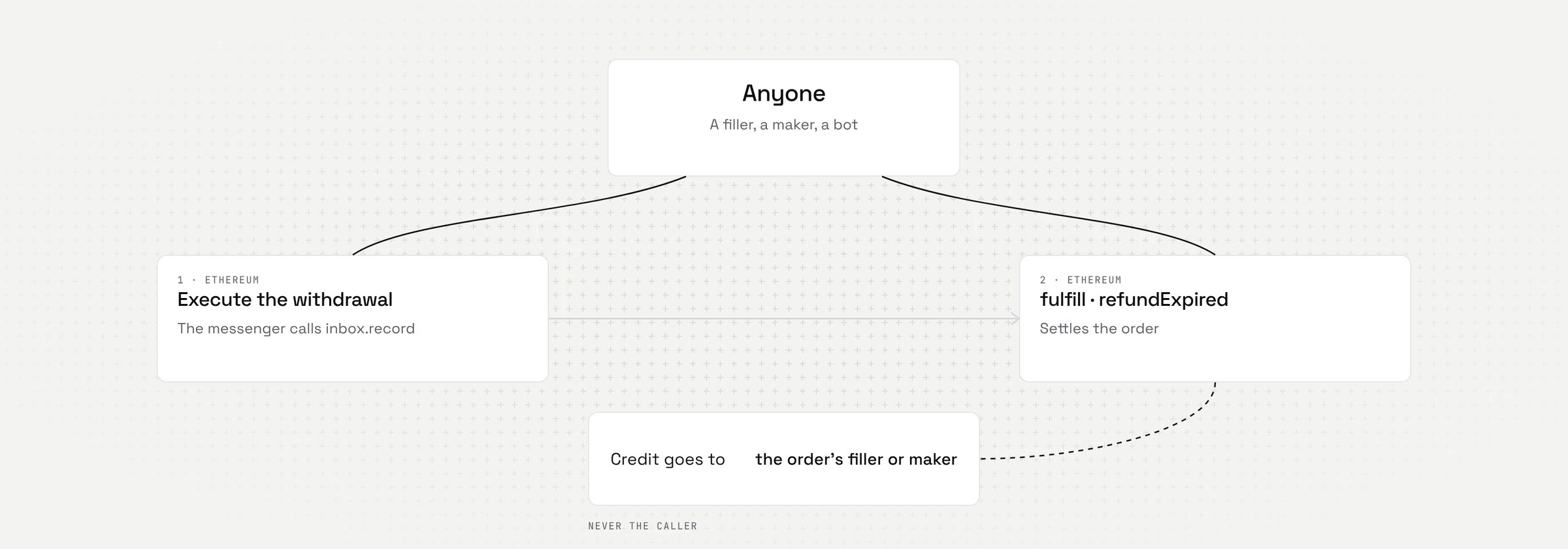
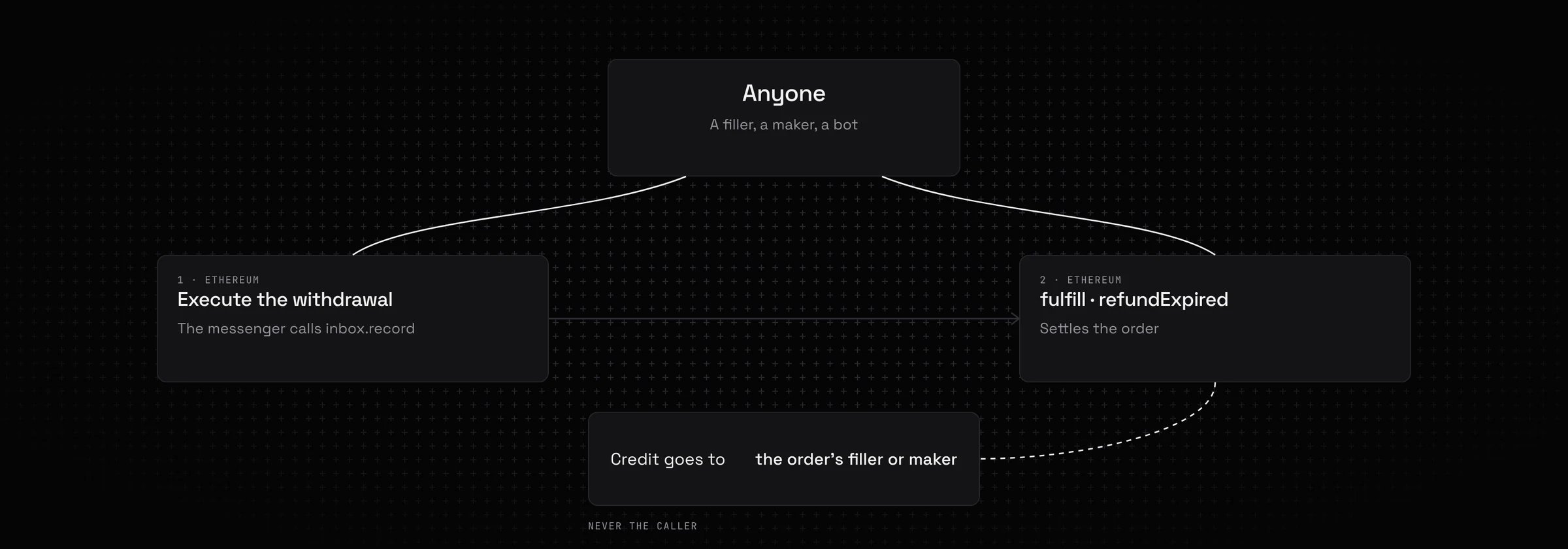
fulfill(id, "")for Paid orrefundExpired(id, "")for ExpiredUnpaid. - Deliver disputed outcomes. Execute the rollup withdrawal on Ethereum so the bridge calls
inbox.record, then settle andresolve.
HyperEVM to Elysium
Tickets from the HyperEVM router normally execute on Elysium by themselves. If one doesn’t, redeem it throughArbRetryableTx.redeem(ticketId) on Elysium, keeping it alive with keepalive if it nears its 7-day timeout. Then settle on the Elysium market.
Arbitrum One
--logs), and simulates the outbox call. It prints unsigned calldata for you to send. Set AMBI_L1_RPC and AMBI_L2_RPC to choose RPCs.