

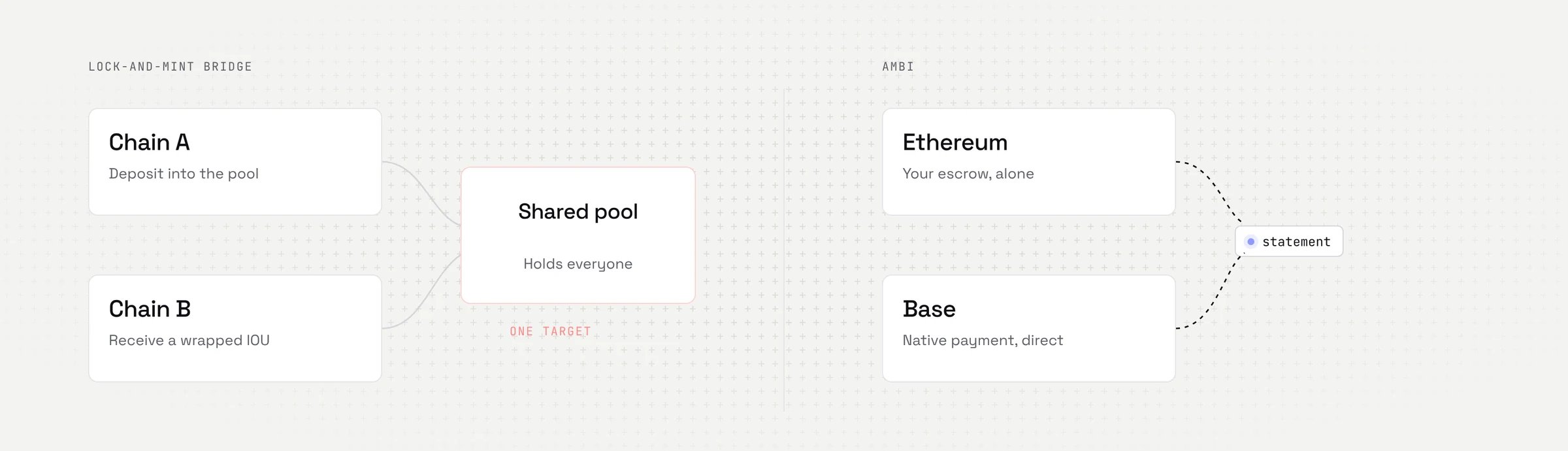
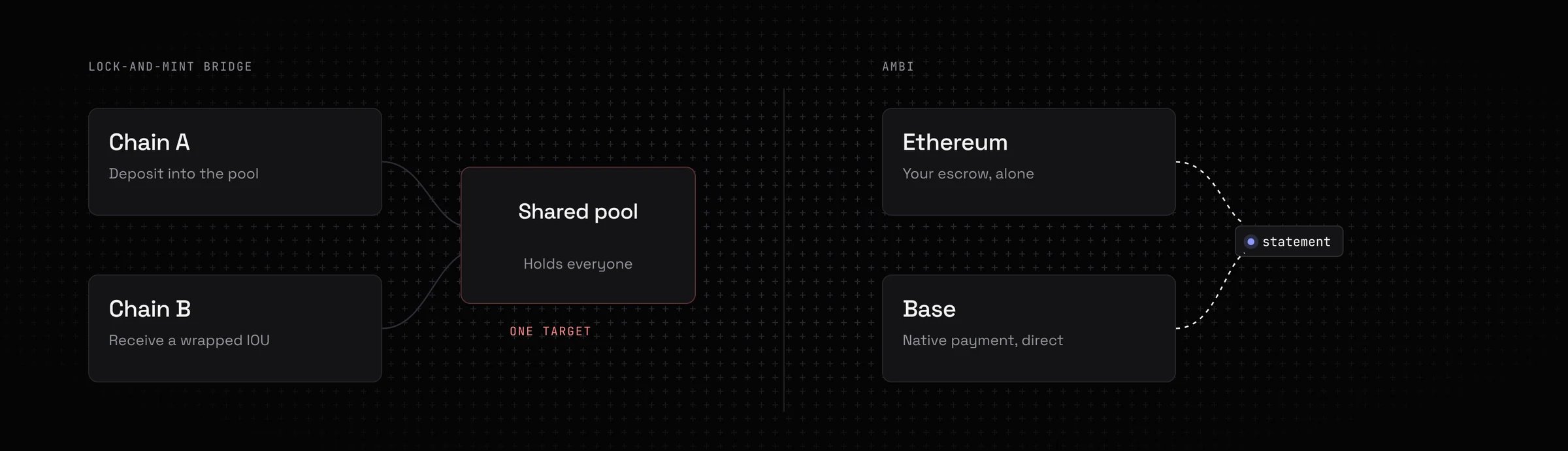
Assets never leave home
The maker’s asset stays in escrow on Ethereum. The filler’s asset moves natively on its own chain. Nothing is minted, wrapped or pooled, so there is no shared vault for anyone to drain and no IOU that can lose its peg.Where new chains find buyers
Between 2027 and 2030, a wave of new blockchains and alternative stores of value comes online. Every one of them starts the same way: miners and validators earn a coin nobody can buy yet. They have to sell to pay for power and hardware, and the chain needs liquidity before anyone builds on it. Until now that meant waiting for an exchange listing, a bridge or a liquidity program. On Ambi, a chain lists once, with a verifier and a router, and the day its route goes live it is connected to the rest of digital finance. Buyers bid from Ethereum: USDC, ETH or anything else Ethereum holds, for the new coin, paid natively on its own chain. A miner fills the bid from their own wallet and collects the Ethereum asset. No wrapped version, no exchange account, no pool to seed. Chains without smart contracts can list too, judged by accumulated proof of work. Ambi is where a miner finds the first buyer, and where a new chain first meets ETH and stablecoins.List a chain
What a chain needs and how a route goes live.
Fill offers
Sell a coin into bids from Ethereum.
Risk stays with the trade
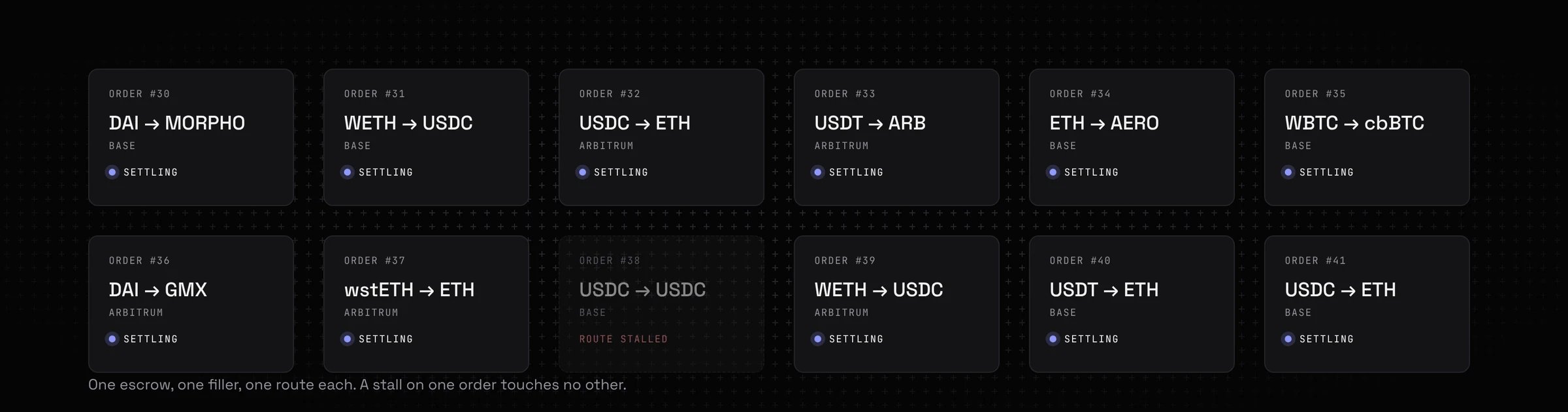
Each order is one escrow, one filler, one route. A failure on one route can delay orders on that route. It cannot touch escrow on any other.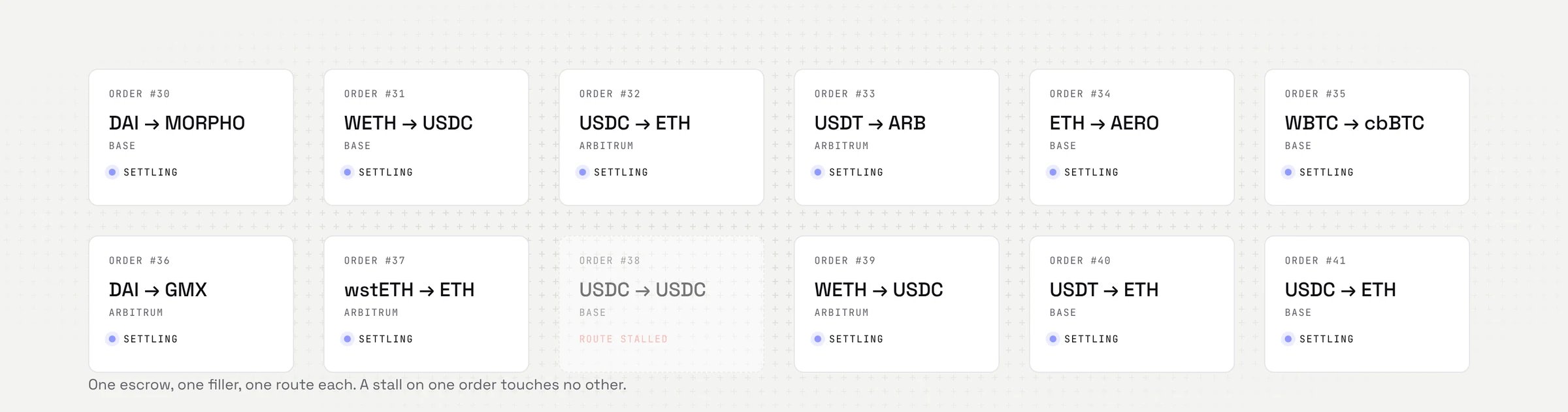
How it compares
Bridges win on instant transfers of popular pairs. Ambi wins where those don’t reach: long-tail assets, new chains, and trades where you don’t want your funds sitting in anyone’s pool. A solver network can also fill on Ambi.